In today’s fast-paced world, most people are not physically exhausted—they are mentally overwhelmed. The constant stream of thoughts, worries, and distractions keeps the mind active even when the body is at rest. This leads to stress, anxiety, poor sleep, and a lack of clarity.
The truth is simple: your mind doesn’t need to be “fixed”—it needs to be guided back into stillness.
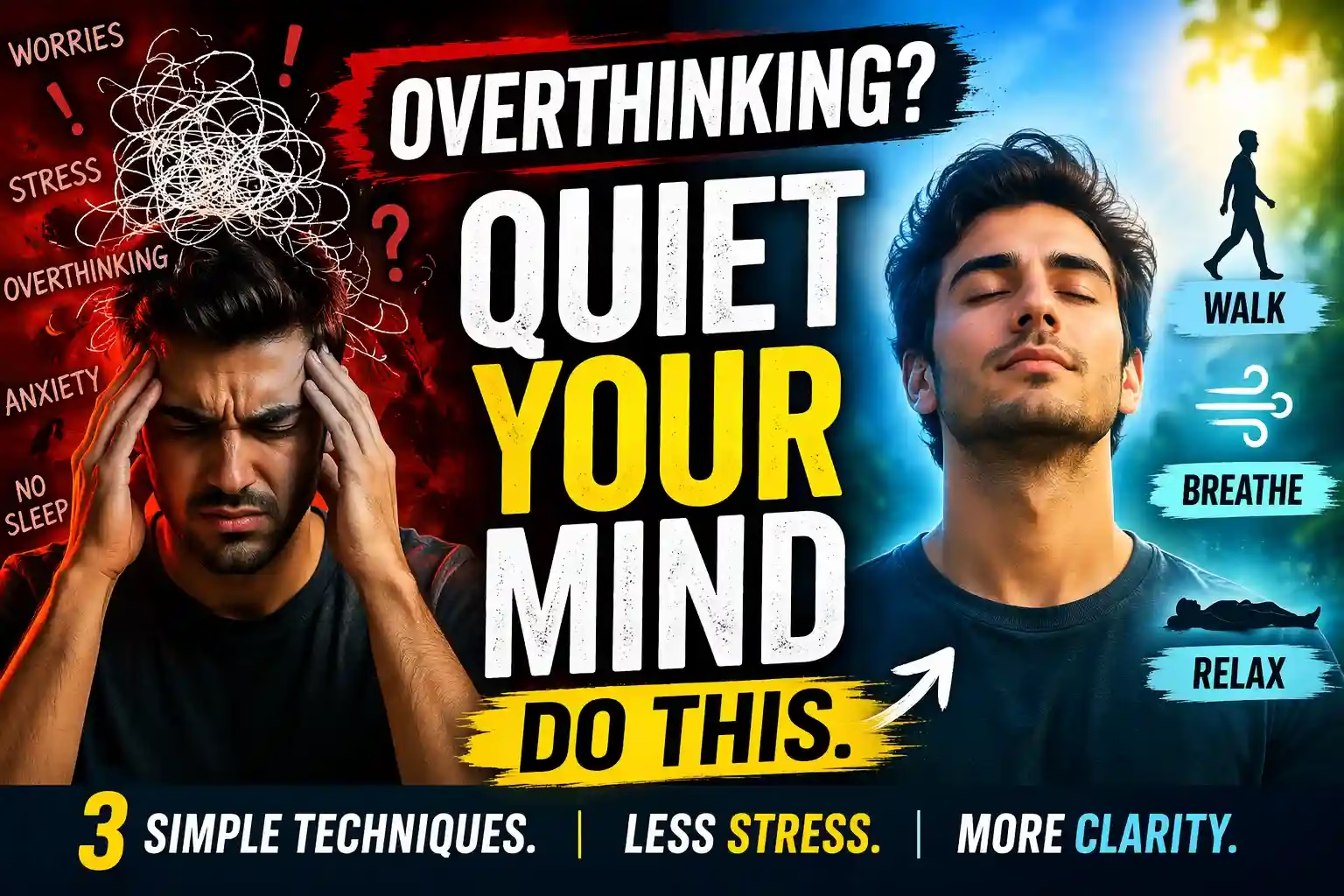
In this article, you’ll learn three powerful, practical techniques to quiet your mind and deeply relax. These methods require no special tools, no long training, and can be done by anyone, anywhere.
They are:
- Walking while letting go of thoughts
- Breathwork by following the breath
- Deep relaxation while lying still
Each of these techniques works by shifting your attention out of mental noise and back into direct experience—where calm naturally exists.
Why Your Mind Feels So Busy
Before we go into the techniques, it’s important to understand what’s actually happening.
Your mind is designed to think—it solves problems, plans, and analyzes. But in modern life, it rarely gets a break. Instead of thinking when needed, it continues running in the background constantly.
This creates:
- Mental fatigue
- Emotional tension
- Difficulty focusing
- Poor sleep quality
According to research from American Psychological Association, chronic stress is directly linked to overactive mental patterns and lack of relaxation.
External resource: https://www.apa.org/topics/stress
The solution is not to fight the mind—but to change your relationship with it.
Technique 1: Walking While Letting Go of Thoughts
Walking is one of the most natural ways to regulate your nervous system. But when combined with awareness, it becomes a powerful tool to quiet the mind.
This practice is similar to what’s often referred to as Mindfulness or walking meditation.
External resource: https://www.mindful.org/walking-meditation/
How to Do It
- Go for a slow, relaxed walk
- Leave your phone behind or put it on silent
- Bring your attention to your steps
- Notice each movement of your feet
- When thoughts arise—don’t engage, just let them pass
The key is not to suppress thinking.
Instead, imagine each thought as a cloud drifting through the sky. You see it—but you don’t follow it.
What Happens in Your Body
As you walk with awareness:
- Your breathing becomes more natural
- Your nervous system begins to regulate
- Your mental activity slows down
Walking engages the body, which helps shift energy away from excessive thinking.
Research from Harvard Medical School shows that mindful movement can significantly reduce stress and improve mental clarity.
External resource: https://www.health.harvard.edu/mind-and-mood/mindfulness-meditation-improves-mental-health
Practical Tip
Start with just 5–10 minutes per day. Consistency matters more than duration.
Internal Resources for Deeper Practice
If you want to expand this practice, explore:
- https://reikidome.com/mindfulness-and-healing
- https://reikidome.com/energy-balance-techniques
- https://reikidome.com/reiki-for-stress-relief
Technique 2: Breathwork — Following the Breath
Your breath is one of the most direct ways to influence your mental state.
Unlike thoughts, your breath is always happening in the present moment. When you bring attention to it, your mind naturally begins to settle.
This is a core principle in many meditation traditions, including teachings influenced by Thich Nhat Hanh.
External resource: https://plumvillage.org/articles/mindful-breathing/
How to Practice
- Sit or lie down comfortably
- Close your eyes
- Bring your attention to your breath
- Feel the air entering and leaving your body
- Do not control the breath—just observe it
When your mind wanders:
- Gently bring it back
- No frustration, no judgment
Why This Works
Focusing on the breath:
- Activates the parasympathetic nervous system
- Reduces heart rate
- Signals safety to the body
Studies from National Institutes of Health confirm that breath awareness practices can reduce anxiety and improve emotional regulation.
External resource: https://www.ncbi.nlm.nih.gov/pmc/articles/PMC6137615/
Common Mistake
Most people try to “breathe correctly.”
This creates tension.
Instead:
- Let the breath be natural
- Your only job is to observe
Advanced Insight
Over time, you may notice:
- The gap between thoughts increases
- Your awareness becomes more stable
- You feel less reactive
This is where real transformation begins.
Internal Resources to Support Breathwork
- https://reikidome.com/breathwork-healing
- https://reikidome.com/nervous-system-reset
- https://reikidome.com/emotional-release
Technique 3: Deep Relaxation — Lying Still Without Falling Asleep
This technique is simple—but very powerful.
It allows your body to enter a state of deep recovery while keeping the mind aware.
It shares similarities with practices like Yoga Nidra.
External resource: https://www.sleepfoundation.org/meditation-for-sleep/yoga-nidra
How to Do It
- Lie flat on your back
- Keep your body completely still
- Close your eyes
- Bring awareness to your body
Now begin relaxing each part:
- Face
- Neck
- Shoulders
- Chest
- Legs
Let everything soften.
The Key Principle
Stay awake.
This is not sleep.
This is conscious relaxation.
What You May Experience
At first:
- Restlessness
- Urge to move
- Racing thoughts
This is normal.
Stay with the process.
After a few minutes:
- Your body releases tension
- Your mind slows down
- You enter a deeply restorative state
Scientific Perspective
According to Cleveland Clinic, deep relaxation techniques can:
- Lower blood pressure
- Reduce stress hormones
- Improve overall well-being
External resource: https://health.clevelandclinic.org/relaxation-techniques/
Internal Resources for Deep Relaxation
- https://reikidome.com/deep-relaxation-session
- https://reikidome.com/reiki-healing-benefits
- https://reikidome.com/inner-peace-practices
Why These Techniques Work Together
Each method targets the mind in a slightly different way:
- Walking → grounds your energy through movement
- Breathwork → centers your awareness internally
- Deep relaxation → resets your entire system
When combined, they create a powerful effect:
- Reduced stress
- Increased clarity
- Emotional balance
You don’t need to do all three every day.
Start with one.
Then gradually integrate the others.
Building a Daily Practice
Here’s a simple structure:
Morning:
5 minutes of breath awareness
Daytime:
10-minute mindful walk
Evening:
5–10 minutes of deep relaxation
This creates a complete cycle of mental reset.
Common Challenges (And How to Overcome Them)
“My mind won’t stop”
That’s normal.
The goal is not to stop thoughts—but to stop identifying with them.
“I don’t have time”
Start with 3 minutes.
Consistency is more important than duration.
“I get bored”
Boredom is often the mind resisting stillness.
Stay with it—this is where the shift happens.
The Deeper Shift
As you practice these techniques regularly, something important changes:
You begin to realize:
You are not your thoughts.
This insight creates:
- Freedom from overthinking
- Emotional stability
- Inner calm
This is the foundation of real mental clarity.
External Resources for Further Learning
- https://www.mayoclinic.org/healthy-lifestyle/stress-management/in-depth/relaxation-technique/art-20045368
- https://www.headspace.com/meditation/meditation-for-beginners
- https://www.psychologytoday.com/us/basics/mindfulness
- https://www.sleepfoundation.org/mental-health/relaxation-techniques-to-reduce-stress
- https://www.webmd.com/balance/stress-management/stress-management
Final Thoughts
Quieting your mind doesn’t require complex systems or long hours of meditation.
It starts with simple awareness.
Walking without engaging thoughts.
Breathing with attention.
Lying still in conscious relaxation.
These are small actions—but they create a powerful shift.
Start today.
Pick one technique.
Practice it consistently.
And you’ll begin to experience something most people are missing:
A quiet, clear, and deeply relaxed mind.
Explore More
If you want guided support and deeper transformation, visit: