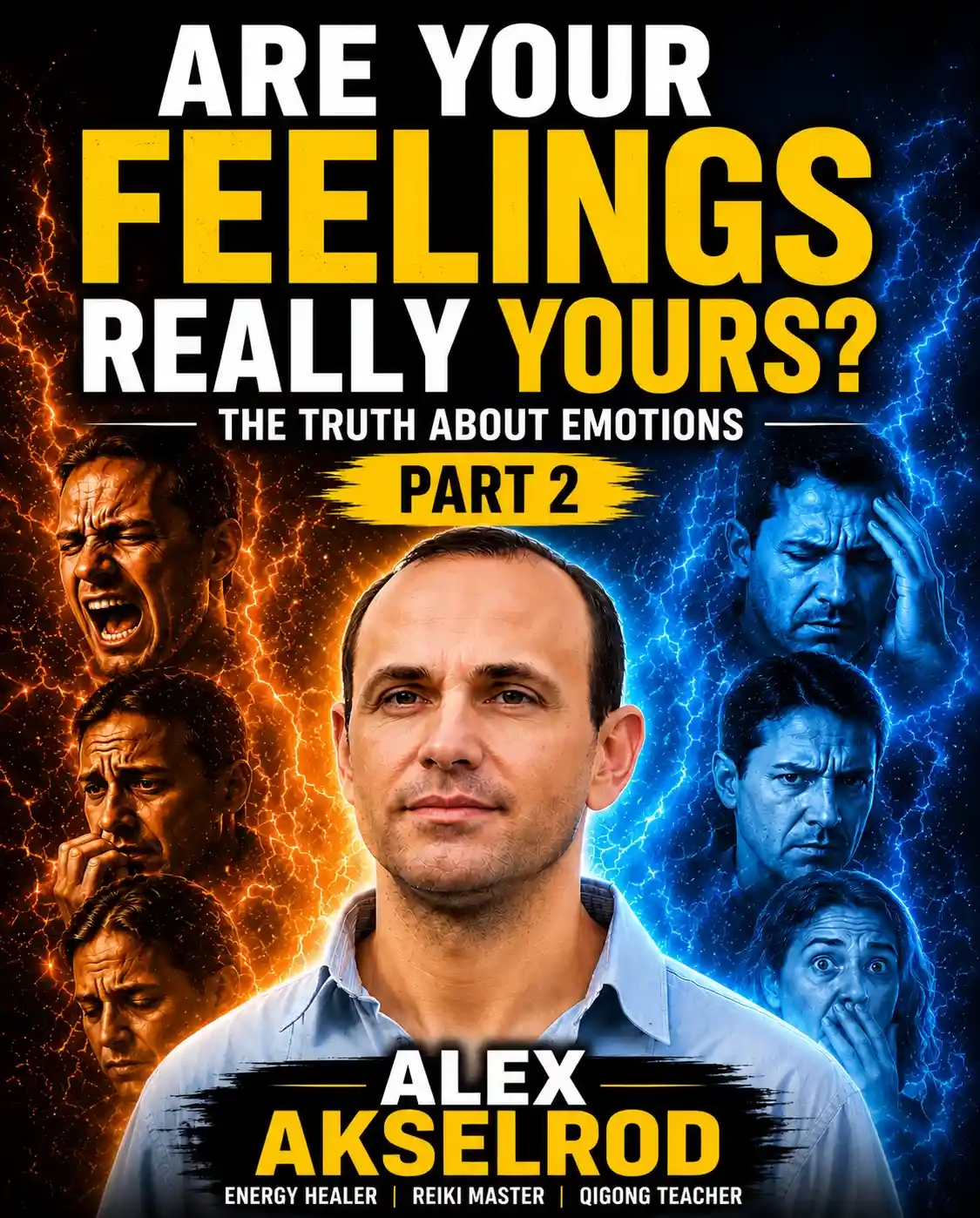
Are Your Feelings Really Yours?
Every day, we experience emotions that shape our thoughts, decisions, and behaviors. Some emotions feel uplifting and empowering. Others feel heavy, stressful, and overwhelming.
But what if many of the feelings you experience are not actually yours?
This may sound unusual at first, but when you begin paying attention to your emotional state throughout the day, you may notice something interesting. Your feelings can change rapidly depending on who you are around, where you are, and what kind of energy surrounds you.
One moment you feel peaceful. Then after a conversation, entering a crowded environment, or reading stressful news online, your emotional state shifts instantly.
This raises an important question:
Are your feelings truly your own—or are you absorbing emotions from the world around you?
Why Emotions Change So Quickly
Human beings are deeply connected to one another emotionally and energetically. Even without words, people constantly influence each other.
You can often sense when:
- Someone is angry
- A room feels tense
- Another person is anxious
- Someone feels peaceful and grounded
This happens because emotions are contagious. Studies in psychology even describe a phenomenon called “emotional contagion,” where people unconsciously mirror emotional states around them.
That means:
- Stress spreads
- Anxiety spreads
- Calmness spreads
- Confidence spreads
Many people absorb emotions without realizing it.
The Difference Between Your Feelings and Absorbed Feelings
Not all emotions come from outside influences. Some emotions are genuinely connected to your personal experiences, beliefs, and memories.
However, many emotions can also be absorbed from:
- Family members
- Coworkers
- Social environments
- Online media
- Crowded places
- High-stress workplaces
This is especially common among highly sensitive people, healers, coaches, caregivers, and professionals working under pressure.
The challenge is that most people never stop to question their emotional state. They simply assume:
“If I feel it, it must be mine.”
But awareness changes everything.
The Observer Mindset
One of the most powerful things you can learn is how to observe your emotions instead of becoming consumed by them.
Instead of saying:
“I am anxious.”
You begin saying:
“I notice anxiety is present.”
This small shift creates emotional space.
You stop identifying completely with temporary emotions and begin recognizing yourself as the awareness observing them.
This perspective can dramatically reduce emotional suffering and stress.
How Emotional Absorption Creates Burnout
Many people today feel emotionally exhausted without understanding why.
Professionals, executives, parents, caregivers, and entrepreneurs often absorb emotional pressure from everyone around them.
Over time, this creates:
- Mental fatigue
- Irritability
- Anxiety
- Lack of motivation
- Emotional heaviness
- Burnout
People then try to “fix” themselves without realizing they may simply be carrying too much external emotional weight.
Learning emotional awareness helps reduce this overload.
A Simple Practice to Regain Emotional Clarity
The next time you feel emotionally overwhelmed, try this simple exercise:
Step 1: Pause
Before reacting, stop for a moment.
Step 2: Ask Yourself
“Is this feeling truly mine?”
Step 3: Observe
Notice:
- When the feeling started
- Who you were around
- What changed in your environment
Step 4: Breathe
Take several slow breaths and simply observe the emotion without judgment.
Often, the emotional intensity begins to decrease once awareness is applied.
Why Awareness Changes Everything
Awareness interrupts unconscious emotional patterns.
Without awareness:
- Emotions control your reactions
- Stress accumulates
- Negative energy builds
With awareness:
- You gain emotional clarity
- You respond instead of react
- You create inner stability
This does not mean suppressing emotions. It means understanding them more deeply.
The Role of Reiki and Energy Healing
Energy healing practices such as Reiki and Qigong can help people become more aware of emotional and energetic imbalances.
These practices are often used to support:
- Stress reduction
- Relaxation
- Emotional balance
- Mental clarity
- Inner peace
Many people find that regular energy healing sessions help them feel lighter, calmer, and more emotionally centered.
If you want to learn more about Reiki and energy healing, explore these verified pages from Reiki Dome:
- https://reikidome.com/
- https://reikidome.com/contact-us/
- https://reikidome.com/services/
- https://reikidome.com/blog/
How Environment Affects Emotional State
Your environment has a major impact on your emotions.
For example:
- Cluttered environments can increase stress
- Calm natural settings can promote relaxation
- Negative conversations can drain your energy
- Positive supportive people can elevate your mood
Many people underestimate how much their surroundings affect their emotional well-being.
This is why emotional and energetic self-care is so important.
Social Media and Emotional Overload
Modern life exposes people to constant emotional stimulation.
Through social media and online content, people absorb:
- Fear
- Anger
- Comparison
- Anxiety
- Negativity
After spending hours consuming emotionally charged content, many people feel emotionally drained without understanding why.
Taking breaks from overstimulating environments can help restore emotional balance.
The Importance of Emotional Boundaries
Healthy emotional boundaries are essential for mental well-being.
Emotional boundaries do not mean isolating yourself from others. They mean becoming aware of what affects you and learning how to protect your emotional state.
Helpful practices include:
- Spending quiet time alone
- Meditation
- Breathwork
- Grounding exercises
- Time in nature
- Limiting negative influences
These practices help strengthen emotional resilience.
Scientific Perspectives on Emotions
Psychology and neuroscience continue exploring how emotions influence the body and mind.
Research shows that chronic stress and emotional overload can affect:
- Sleep
- Immune function
- Hormones
- Energy levels
- Mental clarity
Helpful external resources include:
- https://www.health.harvard.edu/mind-and-mood
- https://www.mayoclinic.org/healthy-lifestyle/stress-management/in-depth/stress/art-20046037
- https://www.apa.org/topics/stress
- https://www.verywellmind.com/what-are-emotions-2795178
These resources provide additional information about emotional health and stress management.
You Are Not Your Temporary Emotions
One of the most freeing realizations is understanding that emotions are temporary experiences—not your identity.
Emotions move through you like weather passing through the sky.
Some emotions stay for minutes. Some last longer. But they always change.
The more attached you become to temporary emotions, the more suffering you create.
The more you observe emotions calmly, the more inner peace you develop.
The Power of Inner Awareness
Awareness helps you separate:
- Your true self
from - Temporary emotional states
This creates:
- Greater peace
- Better decision-making
- Emotional stability
- More confidence
- Reduced stress
Over time, awareness becomes a powerful tool for emotional freedom.
Final Thoughts
The next time you feel emotionally overwhelmed, pause and ask yourself:
“Is this truly mine?”
That one question can completely change your perspective.
You may discover that many emotions are simply passing experiences influenced by your environment, stress, or the emotional energy around you.
When you become the observer instead of the reaction, life begins to feel lighter, calmer, and more peaceful.
Learn More
Explore Reiki, energy healing, and emotional wellness resources:
🌐 Reiki Dome: https://reikidome.com/
🌐 Contact Reiki Dome: https://reikidome.com/contact-us/
🌐 Reiki Sessions: https://reikidome.com/reiki-sessions/
🌐 Reiki Training: https://reikidome.com/reiki-classes/
🌐 Reiki Dome Blog: https://reikidome.com/blog/