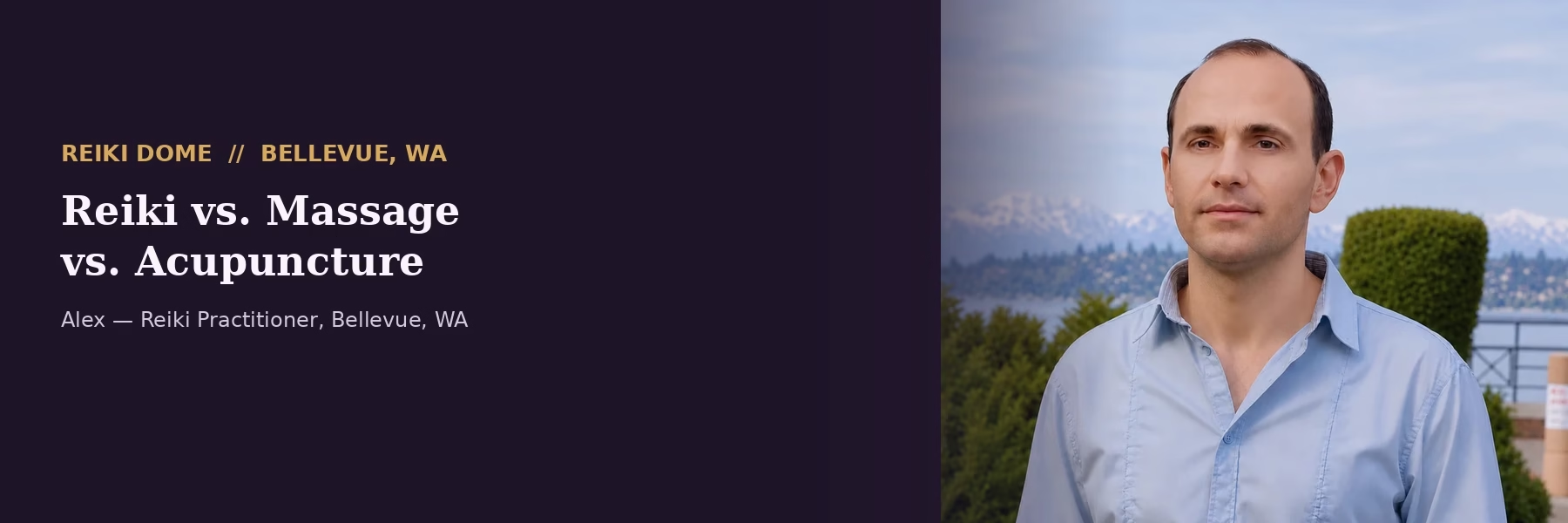
Last updated: 07/2026 By Alex Akselrod, Reiki Practitioner & Certified Energy Healer
If you’re feeling stressed, tense, or just generally depleted, you’ve probably landed on a shortlist of options: Reiki, massage, or acupuncture. All three are widely used complementary approaches to relaxation and wellbeing, and all three are available right here in Bellevue — but they work in genuinely different ways, and the right choice often depends on what you’re actually looking for.
This guide breaks down how each modality works, what the evidence says, and how to think about which one (or which combination) might be the best fit for you.
The Quick Comparison
| Reiki | Massage Therapy | Acupuncture | |
|---|---|---|---|
| How it works | Gentle hands-on or hands-above-body energy work | Manual manipulation of muscles and soft tissue | Thin needles inserted at specific points on the body |
| Physical contact | Light touch or none at all | Direct, often firm physical pressure | Minimal — needle insertion only |
| Clothing | Fully clothed | Typically partially or fully undressed, draped | Fully clothed with limited access points |
| Best known for | Relaxation, stress reduction, emotional balance | Muscle tension, physical pain relief, circulation | Pain management, specific physical symptoms |
| Session feel | Deeply calming, meditative | Physically therapeutic, sometimes intense | Precise, targeted, generally painless |
How Reiki Works
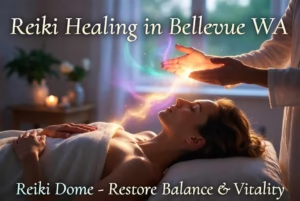
Reiki is a Japanese energy healing practice where a practitioner places their hands lightly on or just above your body, with the intention of supporting your body’s own natural capacity to rest and recover. According to the National Center for Complementary and Integrative Health (NCCIH), Reiki is based on the idea that a subtle energy flows through and around the body, and that gently directing this energy can help restore balance. Sessions are typically done fully clothed, in a quiet setting, often with calming music playing in the background.
Reiki tends to be the right fit if: you want deep relaxation without physical manipulation, you’re sensitive to touch or have an injury that makes massage uncomfortable, you’re processing emotional stress alongside physical tension, or you simply want a calm, meditative experience rather than a more physically active treatment.
How Massage Therapy Works
Massage therapy involves a practitioner directly manipulating your muscles and soft tissue — through kneading, pressure, and stretching techniques — to relieve tension, improve circulation, and reduce pain. Unlike Reiki, massage is fundamentally physical: you’ll typically be partially undressed and draped with sheets, and the practitioner applies varying levels of pressure depending on the technique (Swedish, deep tissue, sports massage, and others).
NCCIH-funded research has found that massage therapy may lead to short-term improvements in pain and mood, and evidence suggests it can help with certain chronic pain conditions when continued consistently over several weeks. That said, NCCIH also notes that while massage is generally low-risk, there have been rare reports of more serious side effects such as bruising, nerve irritation, or, very rarely, more significant injury — particularly with vigorous techniques like deep tissue work.
Massage tends to be the right fit if: you’re dealing with specific muscular tension or physical pain, you want a more physically active, hands-on therapeutic experience, or you’re recovering from physical exertion (like an intense workout week) rather than primarily emotional or energetic depletion.
How Acupuncture Works
Acupuncture, a core practice within Traditional Chinese Medicine, involves inserting very thin needles into specific points on the body believed to correspond to the flow of Qi, or vital energy. According to NCCIH’s overview of acupuncture’s effectiveness and safety, research suggests acupuncture may help with certain kinds of pain, including neck pain and pain associated with fibromyalgia, though study quality varies and NCCIH is careful to note that acupuncture should never be used to postpone seeing a healthcare provider about a health concern. Acupuncture is generally considered safe when performed by a qualified, licensed practitioner using sterile, single-use needles.
Sessions are typically brief in terms of physical intervention — needles are inserted and then left in place for a period of time while you rest — making it a more targeted, precise approach than either Reiki or massage.
Acupuncture tends to be the right fit if: you’re dealing with a specific, diagnosable physical symptom (like chronic pain or migraines) that you’ve discussed with your healthcare provider, and you’re looking for a complementary approach with a somewhat larger body of clinical research behind it compared to energy healing modalities like Reiki.
What the Research Says, Honestly
It’s worth being upfront about where the science currently stands on each of these approaches, since overstating any of them does a disservice to you as someone trying to make an informed decision:
- Acupuncture has the most substantial body of clinical research among the three, particularly for certain types of pain, though NCCIH notes that evidence quality varies by condition and some reviews have found acupuncture doesn’t outperform sham (placebo) acupuncture for every outcome studied.
- Massage therapy has reasonably good evidence for short-term pain and mood improvements, especially with consistent, ongoing sessions, though NCCIH characterizes much of the research as still developing.
- Reiki has the least robust clinical evidence base of the three. NCCIH is direct about this: Reiki hasn’t been clearly shown to be effective for any specific health condition, and existing studies have generally been limited in quality. What Reiki reliably offers, based on client experience, is a deeply relaxing, restorative session — valuable in its own right, even without strong evidence for specific clinical outcomes.
None of this means any of these approaches are “better” or “worse” — it means they serve different purposes, and none of them should replace care from your doctor or other licensed healthcare providers for a diagnosed medical condition.
Can You Combine Them?
Absolutely — and many of our Bellevue clients do. It’s common to use massage or acupuncture for specific physical complaints while using Reiki for the emotional and energetic side of stress and burnout. At Reiki Dome, we also offer Medical Qigong, which shares some conceptual ground with acupuncture’s focus on Qi, but works through movement, breath, and hands-on energy techniques rather than needles — another option worth exploring if you’re drawn to the Traditional Chinese Medicine framework without wanting needles specifically.
Questions to Ask Yourself Before Choosing
- Is my primary concern physical pain, emotional stress, or both? Physical, localized pain often points toward massage or acupuncture; emotional stress and general depletion often responds well to Reiki.
- Am I comfortable with touch, or would I prefer a more hands-off experience? Reiki can be done with no physical contact at all, which matters if you’re touch-sensitive or dealing with an injury.
- Do I want something with more clinical research behind it, or am I open to a more experiential, less evidence-backed approach? Both are valid — just worth being honest with yourself about your own comfort level with uncertainty.
- Would I benefit from combining approaches? Many people do best with a rotation rather than picking just one.
Frequently Asked Questions
Does Reiki hurt, the way acupuncture needles might cause minor discomfort? No. Reiki involves no needles and only very light touch, if any physical contact at all. Most clients describe it as deeply relaxing rather than uncomfortable in any way.
Is acupuncture the “more legitimate” choice since it has more research behind it? Not necessarily “more legitimate” — just differently studied. Acupuncture has a larger body of clinical research, but that doesn’t mean Reiki or massage lack value; it means each approach has been studied to different degrees and for different purposes. The right choice depends on your specific goals, not just which has the most papers written about it.
Can I get a massage and a Reiki session on the same day? Many clients do combine approaches, though it’s worth spacing them out or checking with your practitioner, since both can be quite relaxing and you may want to give your body time to integrate each session.
Do I need to see a doctor before trying any of these? If you have a specific diagnosed condition, it’s always a good idea to loop in your healthcare provider, particularly before starting acupuncture or massage for a physical symptom. All three approaches are best used as a complement to, not a replacement for, conventional medical care.
How do I know if a practitioner is properly trained? For acupuncture, most states require certification from a recognized national board. For massage, look for state licensure. For Reiki, since there’s no government licensing body, look for practitioners who’ve completed a recognized Reiki certification program and are transparent about their training and lineage.
Ready to Find Your Fit?
If you’re still not sure which approach makes the most sense for you, that’s a completely normal place to start from — many clients begin with a conversation before committing to a specific modality. At Reiki Dome, we’re happy to talk through your goals and help you figure out whether Reiki, Medical Qigong, or a combination of approaches makes the most sense for you.
Learn more about our Reiki sessions, explore pricing and packages, or schedule a free consultation to talk through your options. You can also reach us directly at 425-417-2066 or through our contact page.
Further reading: NCCIH – Reiki: An Overview | NCCIH – Acupuncture: Effectiveness and Safety | NCCIH – Chronic Pain and Complementary Health Approaches
About the Author

Alex Akselrod is a Reiki practitioner and certified energy healer based in Bellevue, WA, with 15 years of experience in wellness coaching and alternative medicine. A Qigong teacher and Advanced ThetaHealer®, Alex helps clients navigate the full range of complementary wellness options — including Reiki, Medical Qigong, and Traditional Chinese Medicine — to find the approach that best fits their specific needs.